Thursday, October 8, 2020

#2393 "A Mattawa Portage"


This is Paresseau Falls downstream from Portage de Talon on the Mattawa River in June 2016. My son and I paddled up from the end of the portage to take a closer look. This was the very good reason behind the portage. This was the last of a series of portages headed up the Mattawa River. The Voyageurs travelling upstream no longer needed their river poles. The canoeists would throw away their river poles or "perches" at the Portage des Perches which bypassed Paresseau Falls. Those push poles had all rotted away by the time we made the portage around the falls. 


I had returned to painting some wonderful memories since COVID-19 required self-isolation. I was using the rough side of an historic piece of masonite. An artist friend had passed away and his spouse offerred me his remaining panels to use. I promised to use them all in his memory. This was a studio work because the summer sun and heat were oppressive. The air conditioning was not working in the Singleton Studio so it was starting to get warm in there as well. 

For this and much more art, click on Pixels. Thank you.


Tuesday, October 6, 2020

#2392 "Piney Rock"


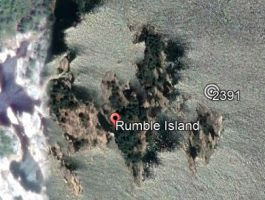
Rumble Island supported some beautiful pines. This copse of trees has survived in very little soil. The last ice age had exported most of our soil to south of the Great Lakes. Each of these trees might have been an individual character but together they were a choir played by the wind. 


Alone on this hunk of rock, all one can hear is the whisper of the wind through the pine needles. The trees on the rocky islands of the Parry Sound Archipelago are not protected from the winds or the weather. The trees take the survival approach of bending with the wind. Why fight it? Nature will always win in the long run and that is as it should be. We need to be better stewards of the land. 

I used a lot of oil on this smooth and slippery surface. 

For this and much more art, click on Pixels. Thank you.


Sunday, October 4, 2020

#2391 "Pines Rock Water 2020"


Rumble island is very rugged. It is another of the 30,000 islands that comprise the Parry Sound Archipelago . One would have to look hard for a safe place to land a canoe. The trees were reaching toward the east with their blown over backs facing the west. Even enduring the constant pressure of the weather, these trees were doing the breathing for the planet like other trees all around the world. They seemed happy in their work. 

My wife thinks I should paint more structures. My portfolio is perhaps full of too many rocks, lakes and trees. There are not many structures unless I leave the Singleton Sanctuary and that is not in the COVID cards. 

Rocks, lakes and trees reminded me of the rock, paper and scissors game. That hand game is also known by other permutations such as scissors paper rock, scissors paper stone or even ro-sham-bo. Two people simultaneously form one of three shapes with an outstretched hand. These shapes are "rock" (a closed fist), "paper" (a flat hand), and "scissors" (a fist with the index finger and middle finger extended, forming a V). "Scissors" is identical to the two-fingered V sign (also indicating "victory" or "peace") except that it is pointed horizontally instead of being held upright in the air. Ro-sham-bo is a simultaneous, zero-sum game that has only two possible outcomes: a draw or a win for one player. 

On the other hand, rocks, lakes and trees is a slight of hand game played with a brush loaded with oil paint. Everybody wins as long as nature is appreciated and protected. Ro-Lak-Tree (a name I made up) is a nature stewardship game that the Group of Seven invented while they were searching for the Canadian identity around the time of the 1918 Flu Pandemic. 

Tom Thomson (back left) with his city visitors (left to right) F.H. Varley, A.Y. Jackson, and Arthur, Marjorie, and Esther Lismer in Algonquin Park, fall 1914. Photograph likely taken by Maud Varley. 

The portfolios of Tom Thomson and his friends who would create the Group of Seven were loaded with rocks, lakes and trees. This COVID-2019 version is my attempt to continue to record the character of Canada in oils. I promise to include more structures in that identity but do not expect the city scapes of glass and steel. 

Alberta Pandemic Poster 1918

The 1918 flu pandemic or the Spanish flu was an unusually deadly influenza pandemic caused by the H1N1 influenza A virus. The 1918 pandemic infected 500 million people which was a third of the world's population at the time. It struck in four successive waves between February 1918 and April 1920 - more than two years. The death toll is typically estimated to have been somewhere between 17 million and 50 million, making it one of the deadliest pandemics in human history. 

Sadly history repeats itself. It is time to respect nature and to heal the scars that man-kind has inflicted on the planet. 

For this and much more art, click on Pixels. Thank you for playing rocks, lakes and trees better known as Ro-Lak-Tree.


Friday, October 2, 2020

#2390 "Weather Beaten"


The trees were heavily flagged on Lally Island - another of the islands in the Georgian Bay Archipelago. Any vegetation that reached above the shrubs was blown over in the prevailing westerly onshore flow. These trees had to be firmly rooted in the Canadian Shield. I wanted to capture the rugged nature of the Georgian Bay landscape. This quiet spot is invaluable as it allows one to be alone with nature. These trees have a personality as well and I wanted them to have their say, so to speak, in the oils. 

The 30,000 Islands of the Parry Sound Archipelago supports unique ecosystems. All kinds of creatures rely on these rocky havens away from the influences of most humans. The fox snake in particular survives in part because they live most of their life on these isolated rocky islands. They swim ashore to hook up and breed. Although eastern foxsnakes are considered terrestrial, these reptiles not only live close to water, they frequently swim from one location to another. Individuals of the Georgian Bay population of Eastern Foxsnake are highly aquatic and on occasion are known to swim for more than 10 kilometres. While it simply swallows baby mice, nestlings and bird eggs, these snakes squeeze larger prey to death before eating it. 

For this and much more art, click on Pixels. Thank you.


Thursday, October 1, 2020

#2389 "Monarch Throne"


The milkflower plant is another of my natural friends. The milkflower is not a noxious and invasive species even though the four letter word "weed" does appear in its more accepted name. This beneficial plant is a member of the genus Asclepias and is well known to be attractive to many insects. There are more than one hundred species of milkweed native to North America and none of them are considered "noxious weeds ". The monarch butterfly in particular can not survive without the milkweed as its host. Accordingly, the milkflower is an essential in any butterfly garden. 

I do my very best to encourage the milkflower. The Grandkids have all been taught how to open a milkflower pod and scatter the contents to the winds. It is fun for the kids and great for nature. This particular milkweed was on the edge of the green lawn. There are many thousand more milkweeds scattered throughout the property making the Singleton Sanctuary an important stop on the Monarch Highway. 

Several of the United States have partnered to create a Monarch Butterfly Highway to facilitate the long migration of the monarch butterfly. Canada could learn from their example. The first Mexican wintering site was discovered in 1974 by Frederick Urquhart of the University of Toronto after 40 years of research. The US National Wildlife Federation has been working with the state departments of transportation from Texas to Minnesota along Interstate 35 to coordinate the Monarch Highway effort. The NWF-designed Monarch Highway logo was officially adopted and announced in 2017 during pollinator week June 19th-23rd. The state departments of transportation promote natural habitat and conservation in their rights of way. The Interstate 35 as Monarch Highway initiative is an example of a recent coordinated effort across six states – Texas, Oklahoma, Kansas, Missouri, Iowa, Minnesota – to provide habitat for the rapidly declining monarch butterfly. This iconic species makes a multi-generational three thousand mile migration in the fall to Mexico and in the spring back up to Canada. Threatened with widespread habitat loss, increased use of pesticides, and climate change impacts, monarchs have suffered upwards of a 90% population decline in the last few decades. 

Monarch Migration Routes

The early North American settlers called these large colourful butterflies "King Billys" after William of Orange who became the English King in 1689. The name gradually morphed to "Monarch" which means King or Queen. I used this concept to describe the milkflower as the regal throne since this particular butterfly is so dependent on this special plant. 

The decline of insects and birds is a hotly-debated issue. It is important to remain informed. The corporate game plan is simple and has been played without variation on many occasions when their self-centred profits where threatened. (from “The Optimistic Environmentalist” by David R. Boyd ) 

  • Deny the existence of any problems.
  • Pay charlatan scientists to lie and say their products or emissions are safe.
  • Finance scientific journals with official-sounding titles to publish bogus articles based on junk science.
  • Buy the support or acquiescence of politicians and bureaucrats. 

Far worse has been done as well but few have been held responsible which casts concerning doubts about the independence of the judiciary. 

This same game plan has been employed in cigarettes, automotive pollution, fossil fuels, abstetos, climate change and a host of different issues. Simply, industry generously funds and promotes views that refute the observations. Industry lobbyists ensure that confusion and dithering results within the ranks of the policy makers and even the general population. Anti-biotechnology activist groups have singled out the herbicide glyphosate as a major driver of the decline while other groups demand more research before any decision can be made. The sad result is similar to rearranging the deck chairs on the Titanic.

The monarch and the milkweed has become symbols for the the struggle between nature and corporate interests. This battle was well described by Rachel Carson (May 27, 1907 – April 14, 1964) in her many writings but most notably in her seminal book "Silent Spring" published just two years before her death from cancer. 

The health of nature and the planet has degraded since then. Power has not shifted from corporate interests and the transition to a circular, green economy has yet to occur. Some have become more enl
ightened in the half century since "Silent Spring". There is hope as long as we remain informed by fact. 

For this and much more art, click on Pixels. Thank you.

Monday, September 28, 2020

#2388 "Cool Vortex Sunset Showers"


A large cold low covered most of northeastern North America. Singleton Lake was on the western fringe. Multiple smaller vortices were orbiting their shared centre of mass like a multi-headed dumbbell. The air within this upper low was generally unstable. The most instability was located along the minor troughs extending from the vortices contained therein. Bands of showers spun around these vortices like spokes on a wheel. In this case there were multiple spinning wheels and together they comprised something more like a series of gears meshing together. The thunderstorms would explode where the gears connected to provide the deepest instability. The unstable air created at the ground by daytime heating of the surface would connect with the instability aloft. This would be a challenging forecast to get absolutely right. I recall many forecasters calling such a day and mix of sun and cloud with a chance of a passing shower or thunderstorm. Hmmm. 

2388 Meteorology
Water Vapour-Enhanced Visible
Radar- Surface Observations

The water vapour showed circular cold areas which were the tops of the convection. These thunderstorms were scattered throughout the upper cold low. The convection was not random although it would take some detailed analysis and diagnosis to figure why each cell developed where and when it did. 

The convective cells west of Singleton were closer to Trenton and all tilted to the southeast with the upper winds. I appreciated the beauty of the day and the meteorology. 

For this and much more art, click on Pixels. Thank you.


Saturday, September 26, 2020

#2387 "After the Thunderstorm Sunset"


This is the back edge of a surpercell thunderstorm. The entire thunderstorm was rotating. It steered right and passed mainly west of Singleton Lake. 

The heavy rain did not show up on any of the official observation sites - just north of YTR, Trenton and south of YGK, Kingston. These may now be automated observations sites and thus almost misleading and certainly not very helpful to any meteorologist. This is the reason I employed all kinds of remote sensing into the performance measurement system I built.  

A couple of guys were fishing on the edge of the deeper water. The fish like to hang out on the edge of that shoal. The fishermen were oblivious to the threatening weather. 

For this and much more art, click on Pixels. Thank you.


Thursday, September 24, 2020

#2386 "Porcupine Smorgasbord"


Our lawn is green. By that I mean it is free of chemicals and hopefully most invasive species. I am okay with the invasive daisies. I planted clover because everyone loves clover. The lawn is full of white and red clover although some more typical grass type plants have infiltrated the area. The clover is typically green and does well in drought situations as well. 


The flowers tend to dry out and turn brown during dry spells but the creatures still love them. The porcupine in particular will gently draw the head of the clover into its open mouth and clip off the entire flower. He emerges just before dusk and is often still feeding when I get up at dawn. The deer love the clover as well. There are not many honey bees but the bumble bees that are around certainly enjoy the clover-filled lawn. 

This could be Porky or Piney delicately browsing off the heads of the red clover in the lawn. They both look the same to me and seldom are they together grazing at the same time.

You might wonder why we have a lawn at all out in the sticks of Singleton. Many birds but especially the blue birds and phoebes love a cut, short field to hunt over. The stakes I have to protect the small trees are perfect from which to perch like vultures waiting for an unsuspecting bug to come by. The adult ticks also prefer the taller grasses from which they attach to their favourite hosts, the white tailed deer or some unsuspecting, unconscious human . The cut lawn is all natural and we rely only on the rain to keep it green. If it is dry even the clover will eventually turn brown. 

Just some of the nature that enjoys the Singleton Sanctuary

I try to cut the clover lawn as infrequently as possible and we seldom cut all of it at one time - trimming only the clover that has gone to seed and leaving a patchwork of blossoms for the wildlife. Deer, turkeys and porcupine can be seen together at one time munching on the flowers. The insects that the clover attracts are feed for all of the birds. Eastern kingbirds love the bees. The phoebes and bluebirds are not picky and seem to enjoy almost anything that flies or crawls. I encourage the mulleins... by not discouraging them. They are perfect hunting perches for the birds and the insects love the little yellow flowers. The bears like to feed on the seed heads of the tall grasses while walking along the edge of the cut grass. There is a place for everyone in the Singleton Sanctuary. 


Lately I have been employing the turkey flock as edge trimmers. For a bit of corn they will trim the "lawn" along the sidewalk and spot fertilizer as well. It takes a crew of ten to twenty birds and they come twice a day to manicure along the sidewalk. 

That's my story and I am sticking to it. I would rather paint than cut it. 

For this and much more art, click on Pixels. Thank you.


Tuesday, September 22, 2020

#2385 "Bullhead Lily"


 I went out for an early morning paddle around Singleton Lake. These yellow pond lilies caught my eye. They were the brightest thing on the lake except for the rising sun. 


I located the loon family as well and both chicks were in great shape. The loons are more wary of the canoe than they are of motor boats. I do not understand that as I give them their nesting platform and protect them. I gave them a very wide berth so they would not be alarmed. The time of the photo of the yellow lily was 6 am. I had started my morning paddle shortly after 5 am. This yellow lily is also called the Bullhead lily (Scientific name: Nuphar lutea) so that is what I decided to call the painting. 

The yellow pond lily is an aquatic perennial herb. It produces glossy; 5 cm wide flowers floating on or raised above the water. There are six bright yellow, petal-like sepals and many small yellow petals that put on a show all summer long. The floating leaves are veined, heart-shaped with rounded lobes; 10-25 cm long. The stalks of Yellow Pond Lily are attached to an underground stem with roots called a rhizome. Rhizomes are buried in the mud below the water surface. The rhizomes grow quickly to form large colonies.

I used a lot of paint and a minimal number of brush strokes. It was fun. What a happy flower!

For this and much more art, click on Pixels. Thank you.


#3023 "Next Adventure at Parry Sound" Part Two

#3023 "Next Adventure at Parry Sound" 20 X 24 inches, oils on canvas. Started at 9:15 am, Wednesday, June 24th, 2026 There is noth...